What is ACP-5 Form? Why is it important?
What is ACP-5 Form?
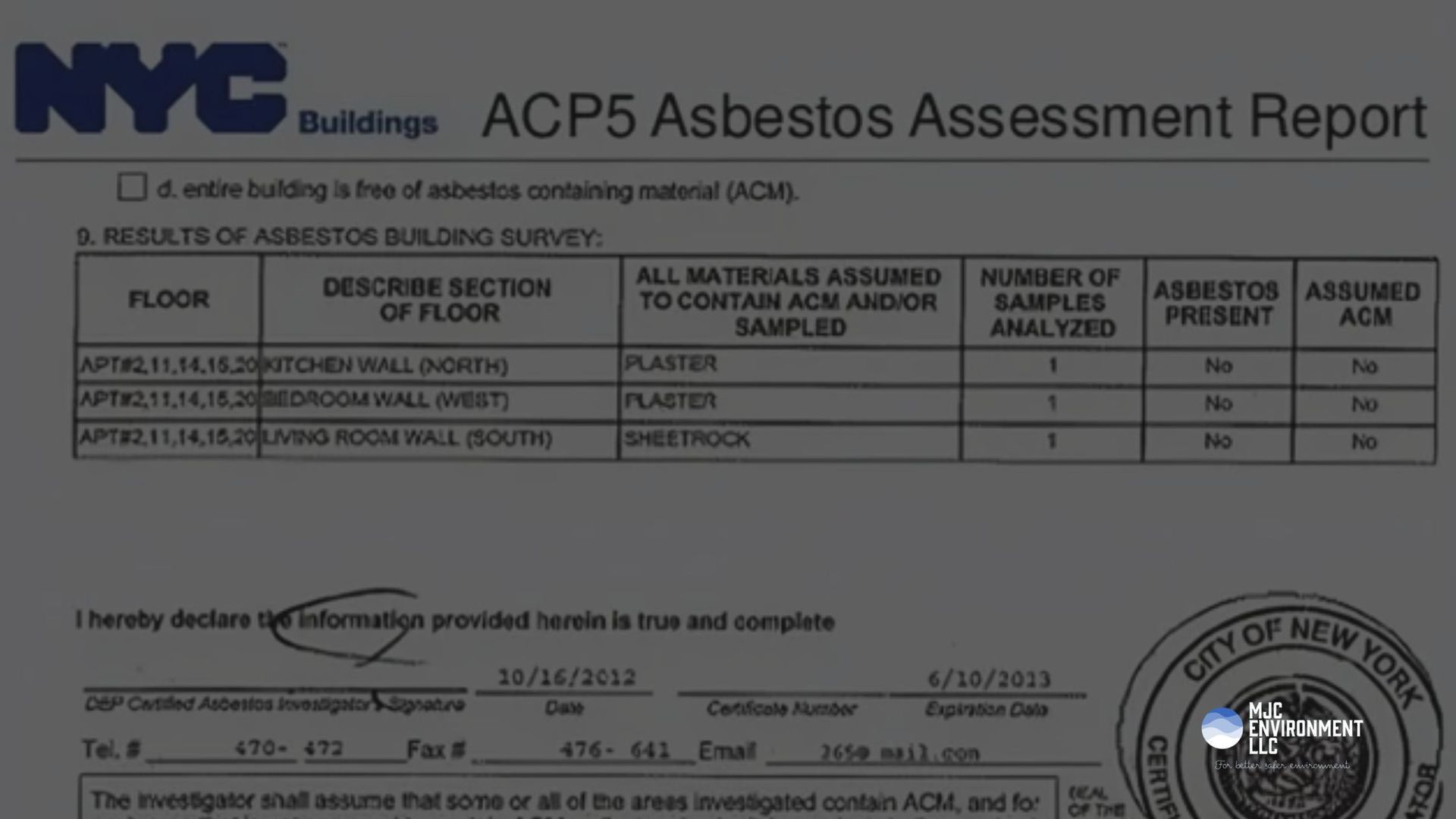
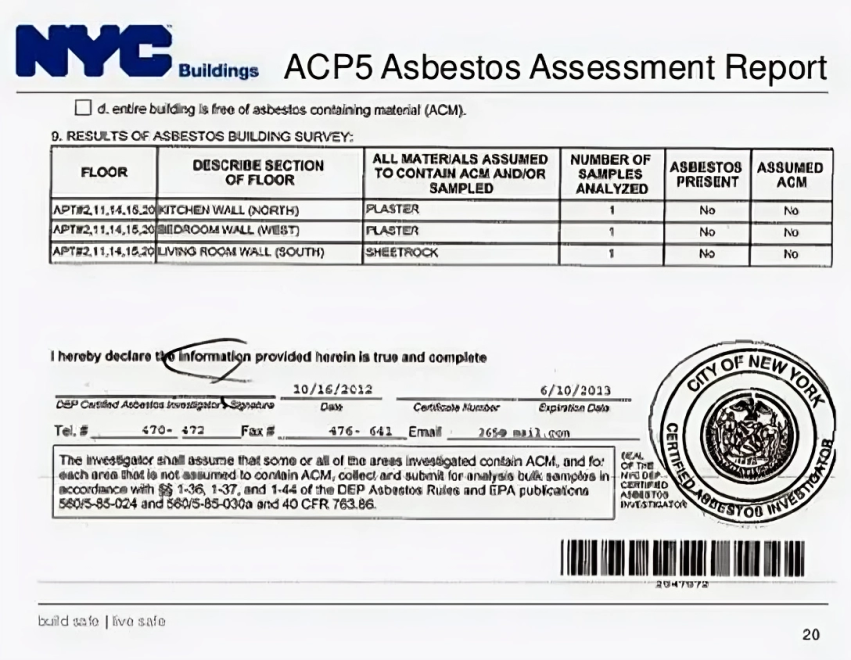
In New York, ACP-5 Form is an Asbestos Assessment Report required by the New York City Department of Buildings (DOB) for certain construction projects. It is required in New York City for any construction, renovation, or demolition work. Asbestos, a naturally occurring mineral once widely used in construction materials due to its fire-resistant properties, poses significant health risks when disturbed. The ACP-5 Form serves as a certification that a building or specific area has been thoroughly inspected by a DEP-certified asbestos investigator. This form not only confirms whether asbestos-containing materials (ACM) are present but also outlines the necessary steps to ensure safety during construction activities.
Key Features of the ACP-5 Form
1. Certification Requirement: The ACP-5 Form must be completed by a certified asbestos investigator who assesses the presence of ACM in the building or area in question. This ensures that only qualified professionals are involved in the assessment process.
2. Thresholds for Asbestos: If the inspection determines that ACM will not be disturbed during construction or if it is found to be less than 10 square feet or 25 linear feet, the form can be submitted to the Department of Environmental Protection (DEP) without further action. This threshold helps streamline processes for smaller projects while still maintaining safety standards.
3. Documentation: While the ACP-5 Form itself is not a comprehensive survey report, it serves as an important notification form. Investigators are required to maintain detailed records of their assessments and findings, which may be requested by regulatory agencies if needed.
4. Submission Process: The completed ACP-5 Form must be submitted to the DEP prior to the commencement of any construction work. This submission is essential for ensuring that all parties involved are aware of potential asbestos hazards.
Why is ACP-5 Important?
The significance of the ACP-5 Form extends beyond mere compliance; it plays a vital role in **public health and safety**. Asbestos exposure can lead to severe health issues, including lung diseases such as asbestosis and cancers like mesothelioma. Due to these risks, strict regulations govern how asbestos is managed during construction activities.
Reasons for Its Importance
1. Health Protection: The primary goal of requiring an ACP-5 Form is to protect public health. By mandating that asbestos assessments are conducted before any disturbing work begins, the form helps prevent potential exposure to workers and residents. This proactive approach reduces the risk of airborne asbestos fibers, which can have devastating health consequences.
2. Regulatory Compliance: The ACP-5 Form is part of New York City's stringent regulations regarding asbestos management. These regulations are designed to ensure that all necessary precautions are taken during construction or demolition activities. Compliance with these regulations not only protects individuals but also upholds community health standards.
3. Legal Requirement: Failing to obtain an ACP-5 can lead to serious legal consequences, including fines and work stoppages. Regulatory agencies take violations seriously, and contractors or property owners who neglect this requirement may face significant penalties.
4. Community Awareness: The process surrounding the ACP-5 Form fosters greater awareness about asbestos-related risks within communities. When property owners and contractors engage with these regulations, they contribute to a culture of safety and responsibility.
Process Overview
Understanding the process associated with the ACP-5 Form can help stakeholders navigate compliance effectively:
1. Asbestos Inspection: Before any construction work begins, a certified investigator conducts a thorough inspection to identify potential ACM in the building or area being assessed.
2. Completion of ACP-5: If no significant ACM is found or if it will not be disturbed during construction, the investigator completes and submits the ACP-5 Form to the DEP. This step is crucial for moving forward with construction without unnecessary delays.
3. Follow-Up Actions: If ACM is identified and will be disturbed during construction activities, further actions must be planned and executed according to additional regulations. This may involve hiring specialized contractors for asbestos abatement and ensuring proper disposal methods are followed.
4. Ongoing Monitoring: In some cases, ongoing monitoring may be required during construction projects where ACM is present but not being disturbed directly. This ensures that safety protocols remain in place throughout the duration of the project.
Conclusion
In summary, the ACP-5 Form is more than just a bureaucratic requirement; it is a critical component of New York City's efforts to manage asbestos safely during construction activities. By ensuring proper assessments are conducted and documented, this form plays an essential role in protecting public health while facilitating compliance with environmental regulations. For property owners, contractors, and communities alike, understanding and adhering to the requirements associated with the ACP-5 Form can lead to safer construction practices and healthier living environments for all.