What is Tremolite Asbestos? Risks, Identification, and Safe Removal
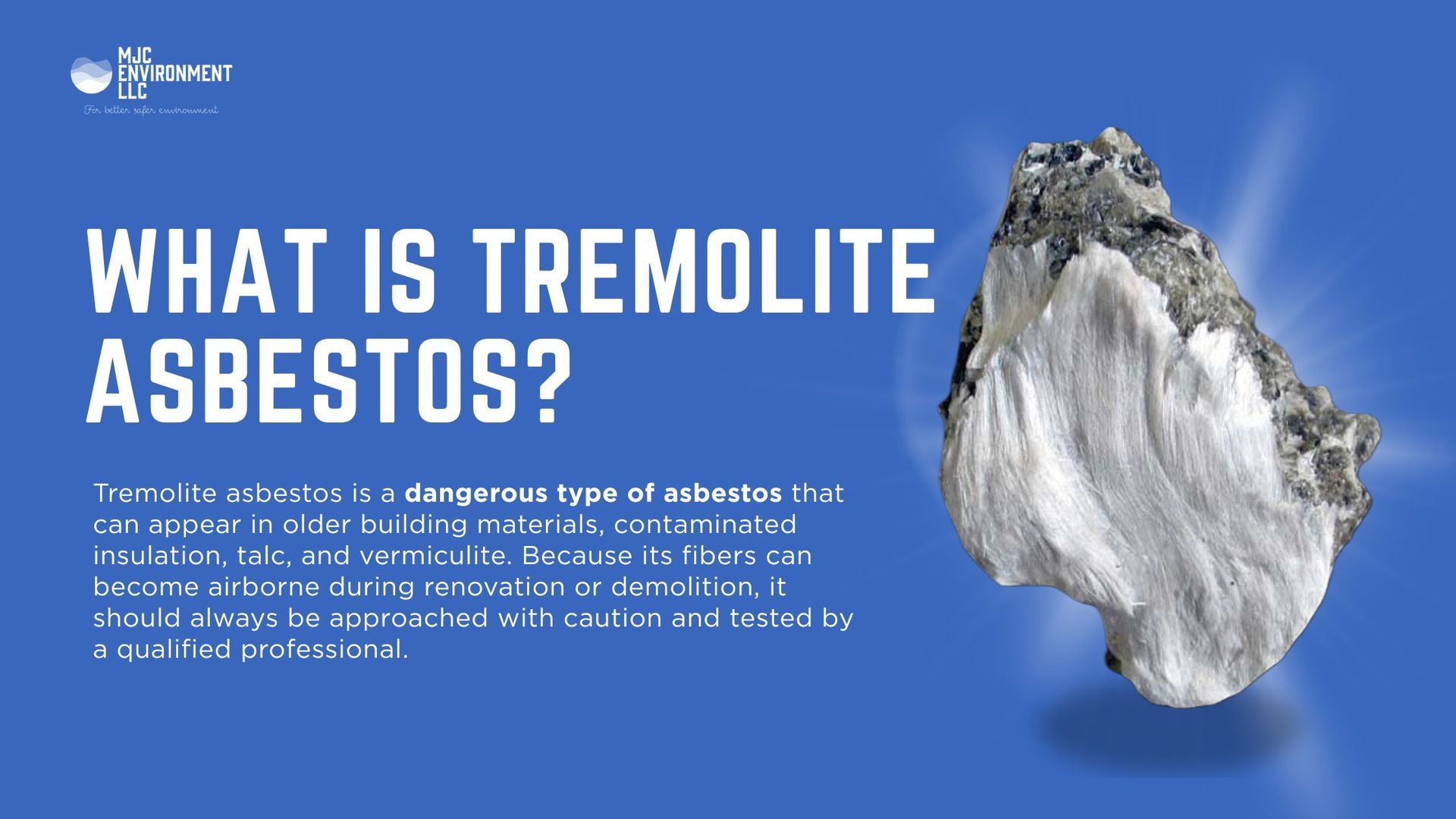
Tremolite asbestos is a dangerous type of asbestos that can appear in older building materials, contaminated insulation, talc, and vermiculite. Because its fibers can become airborne during renovation or demolition, it should always be approached with caution and tested by a qualified professional.
What Is Tremolite Asbestos?
Tremolite is a naturally occurring mineral in the amphibole group. In its fibrous form, it becomes tremolite asbestos, which is hazardous when inhaled. It is not usually used as a standalone commercial asbestos product, but it is often found as a contaminant in other materials.
Because asbestos fibers are not always visible to the naked eye, identifying suspect material often requires professional testing. If you are trying to understand what asbestos can look like in building materials, this guide on what asbestos looks like is a helpful starting point.
Why Tremolite Asbestos Is Dangerous
The main danger of tremolite asbestos is that its microscopic fibers can lodge deep in the lungs when inhaled. Over time, this exposure may lead to serious diseases such as asbestosis, lung cancer, and mesothelioma.
The risk increases when the material is disturbed during repairs, demolition, or even routine maintenance. That is why homeowners, property managers, and contractors should avoid guessing and rely on proper inspection instead.
Where Tremolite Asbestos May Be Found
Tremolite asbestos may show up in:
- Vermiculite insulation.
- Talc-based products.
- Older construction materials.
- Contaminated soil near mining areas.
- Ceiling, wall, or floor materials installed before asbestos restrictions.
It is especially important to be cautious if you are dealing with textured ceilings or other older surface materials. This article on how to know if a popcorn ceiling has asbestos can help explain one common example.
How Tremolite Asbestos Is Identified
You cannot confirm tremolite asbestos by appearance alone. Many asbestos-containing materials look ordinary, and some do not have any noticeable smell or warning sign. Laboratory testing is the only reliable way to identify it.
If you are wondering whether asbestos can give off an odor, this page on does asbestos have a smell gives a clear explanation of why smell is not a dependable indicator.
What To Do If You Suspect It
If you think a material may contain tremolite asbestos, do not cut, break, sand, or vacuum it. Disturbing it can release fibers into the air and increase exposure risk.
The safest next steps are to isolate the area, limit access, and arrange for professional sampling. Never rely on visual inspection alone when asbestos may be involved.
Removal and Abatement
If testing confirms tremolite asbestos, the material should be managed by trained asbestos professionals. Depending on the condition of the material, the solution may involve encapsulation, enclosure, or removal.
During abatement, professionals use containment controls, HEPA filtration, and protective procedures to reduce fiber release. After the work is done, clearance testing helps confirm the area is safe again.
Health Risks of Exposure
Exposure to tremolite asbestos does not always cause immediate symptoms. In many cases, disease develops slowly over many years.
Possible health effects include:
- Shortness of breath.
- Persistent coughing.
- Chest pain.
- Lung scarring.
- Increased cancer risk.
Because these conditions can be severe, anyone with possible exposure should take the risk seriously and avoid further disturbance of suspect materials.
FAQs About Tremolite Asbestos
Q1. Is tremolite asbestos the same as other asbestos types?
Tremolite is one of the asbestos minerals in the amphibole group. It is different from chrysotile, but it is still dangerous and should be treated as a serious hazard.
Q2. Can I identify tremolite asbestos by looking at it?
No. Visual inspection is not enough to confirm asbestos. Only lab testing of a properly collected sample can verify whether tremolite is present.
Q3. Does asbestos always have a smell?
No. Asbestos is generally odorless, which is why smell is not a reliable way to detect it. For more detail, see does asbestos have a smell.
Q4. What should I do if I find suspicious insulation or ceiling material?
Stop work immediately, avoid disturbing the material, and arrange for professional testing. If you are dealing with older textured ceilings, this guide on popcorn ceiling asbestos signs may be useful.
Q5. Is tremolite asbestos dangerous even if it looks intact?
Yes. Even intact asbestos materials can become dangerous once they are damaged or disturbed, so they should be assessed before any renovation or removal work.
Final Thoughts
Tremolite asbestos is a serious concern because it can be hidden inside common building materials and released during ordinary construction work. The safest approach is to treat any suspicious material cautiously, avoid disturbing it, and rely on professional testing before making decisions.
For anyone dealing with older insulation, textured ceilings, or other suspect materials, the right information and proper inspection can prevent costly and dangerous mistakes.